León · Hotels
Hotel la Perla Leon
What convinced us is the 1858 house itself, one of the oldest buildings in Nicaragua...
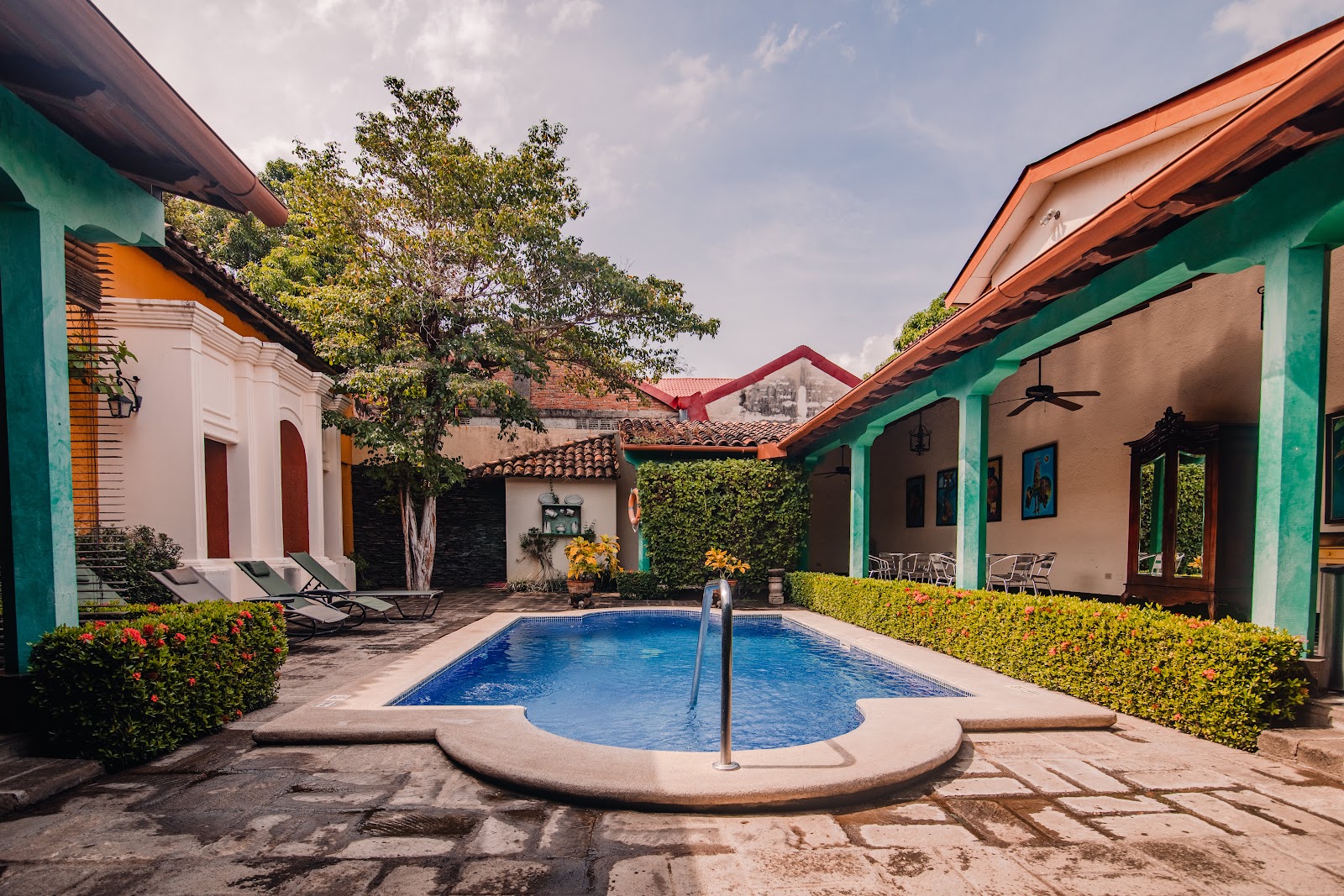

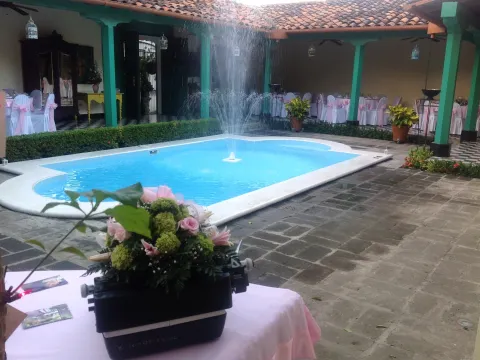
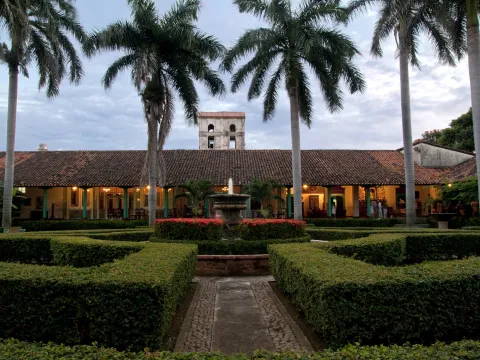
León wears its history without varnish, and the hotel that sits against the Iglesia San Francisco is the clearest example of it. The San Francisco convent was founded here in 1639, emptied when the religious orders were dissolved, then spent the nineteenth century as a Lancastrian school and as the Instituto Nacional de Occidente before the Reverend Mothers of the Assumption took it over. Unrest, an earthquake and the war of the 1980s each took something from the building. The reconstruction worked from historical photographs and local accounts, and what came out of it is a hotel with a genuine cloister: an enclosed courtyard, a fountain, clipped tropical topiary, and corridors that stay cool at three in the afternoon.
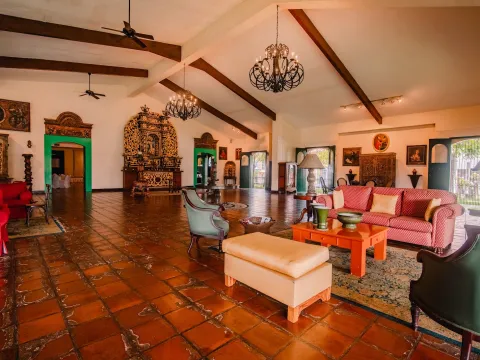
The first argument is that the building is the attraction, not the backdrop. The second is the art. El Convento hangs pieces from the Ortiz-Gurdián Foundation collection along its public rooms: carved wooden saints, colonial religious paintings gathered from across the Americas, heavy period furniture, and in the lobby a full reproduction of the gilded baroque altar of Subtiava church. Guests effectively sleep inside a small museum of colonial Catholicism. The third is restraint. Rooms are plain, tiled, cool and large, and nobody has tried to turn a convent into a resort. For a city best seen on foot, that is the right instinct.
Two blocks west and half a block north of Parque Central puts the cathedral, the museums and the churches of the historic centre inside a ten minute walk, and it keeps the hotel off the noisiest side of the square. The Iglesia San Francisco is the immediate neighbour. Walk east and León becomes markets, student bars and the murals of a university city. Drive out of town and the volcanoes begin, with the black slopes of Cerro Negro and the Pacific at Las Peñitas both within reach of a day trip. The practical gain is simple: you can see León without a car and still get to the coast for an afternoon.
Price: Premium
Vibe: Colonial, monastic, quiet, art filled
Rooms: Thirty-odd rooms around the cloister, Spanish tiles, understated furnishings, large bathrooms and reliable air conditioning; sizes and outlooks vary, and some face the street rather than the courtyard
Best For: History and architecture travellers, couples, anyone using León as a base for the volcanoes and the coast
Our Favorite Thing About the Hotel: The gilded baroque altar of Subtiava church, reproduced in full in the lobby
Dining: A café and restaurant serving Nicaraguan cooking alongside international dishes, with continental breakfast included in the rate
Amenities: Enclosed courtyard garden with fountain, fitness facilities, family rooms, free private parking on site
Attractions: Iglesia San Francisco next door, León cathedral and Parque Central two blocks away, the Ortiz-Gurdián art collection, Cerro Negro volcano and the beach at Las Peñitas
The collection is what people remember. The Ortiz-Gurdián Foundation, whose own galleries are a few streets away, lends the hotel hand-carved santos, colonial canvases from Spanish America, and furniture too heavy to move twice. It hangs in corridors and sitting rooms rather than behind rope, so you meet it on the way to breakfast. The Subtiava altar reproduction in the lobby is the set piece, gold gilt and baroque, and it explains the hotel's argument better than any brochure line: this is a house that took the trouble.
León is hot, and the rooms answer that rather than decorate around it. Thick walls, tiled floors, high ceilings, air conditioning that works, large bathrooms and very little ornament. The trade off is that they are not uniform: some look onto the courtyard and the fountain, others onto the street, and that difference matters more here than the room category does. Ask for a courtyard side room when you book.
The café and restaurant work off the courtyard, which is where breakfast lands, included in the rate. The kitchen cooks Nicaraguan dishes alongside international standards and does it carefully, which in a city where the best food is mostly street food is more useful than it sounds. The courtyard doubles as the evening room: a drink, the fountain, and the corridors going dark around it.