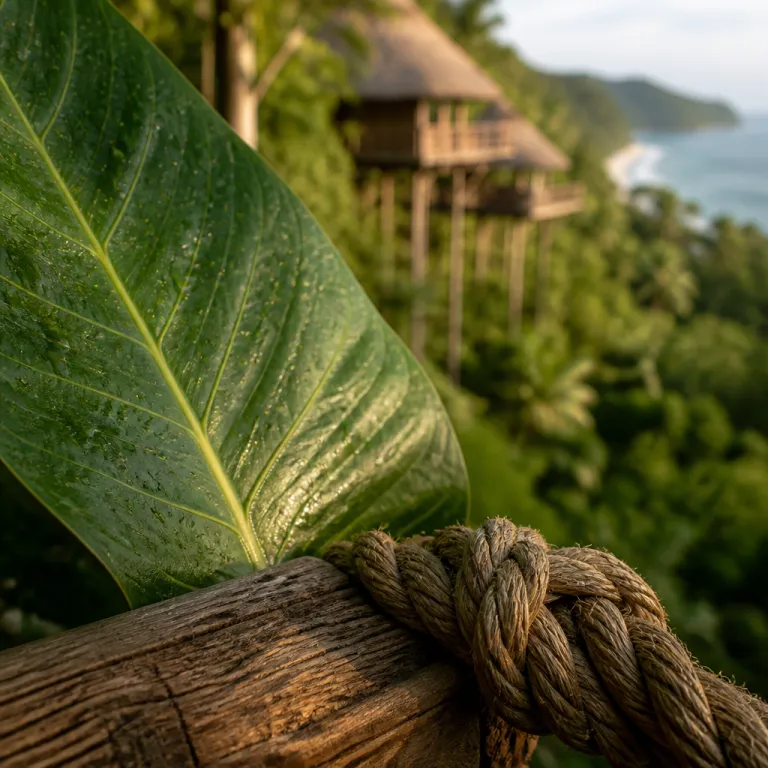
TreeCasa Resort Nicaragua sustainable luxury review: where plastic-free becomes policy
TreeCasa Resort rises in the hills above San Juan del Sur, overlooking one of Nicaragua’s most storied surf bays. This TreeCasa Resort Nicaragua sustainable luxury review examines how the property converts broad sustainability pledges into the daily reality of a hotel stay, from the first glass of drinking water to the last sunset over the Pacific. For business leisure travelers accustomed to five-star brands, the core question is demanding yet practical: can an eco-focused resort deliver executive-level comfort without the usual plastic footprint?
The hillside location matters because the resort sits just inland from San Juan del Sur, a town where plastic bottles still wash up on the beach after every storm. TreeCasa has publicly aligned its plastic-reduction work with the UN Global Tourism Plastics Initiative and the circular-economy principles championed by the Ellen MacArthur Foundation; readers should confirm current participation status and targets directly with the resort and those organizations, as public listings can change. The property’s position above the bay gives wide views into the forest canopy, and those views frame almost every room, pool terrace and open-air staircase as you move through the resort.
TreeCasa Resort, officially listed as TreeCasa Resort, San Juan del Sur, Nicaragua, operates as an eco-luxury retreat rather than a conventional beach hotel. The Nicaragua TreeCasa setting uses sustainable architecture and eco-friendly materials, integrating treehouse-style accommodations and canopy suites into the hillside instead of flattening it. This review treats TreeCasa as a test case for where Nicaragua’s high-end eco segment is heading, and whether clearly articulated sustainability goals can justify a premium over unverified eco claims in the same region.
From pledge to practice: what plastic-free luxury looks like on the hill above San Juan del Sur
Plastic-free water, amenities and daily operations
Plastic-free luxury at TreeCasa begins with water, the most basic amenity in any hotel. Instead of single-use bottles in every room, the resort offers filtered water stations and glass carafes, so guests refill reusable bottles and the housekeeping team focuses on hygiene rather than plastic restocking. For a traveler used to a minibar lined with branded plastic, this shift feels different at first, yet it quickly becomes part of the property’s calm, open-air rhythm.
The UN Global Tourism Plastics Initiative asks participating hospitality businesses to eliminate unnecessary plastics and move toward reusable systems, and TreeCasa Resort’s sustainability communications state that it aims “to eliminate unnecessary plastics and implement reusable solutions by 2025.” At the time of writing, this 2025 target and any formal UN GTPI participation should be treated as claims made by the resort; prospective guests should consult the latest official materials or UN GTPI documentation to verify current status and progress. That target shows up in the room features, where bathroom amenities come in refillable dispensers, and in the restaurants, where straws, stirrers and most packaging have disappeared in favor of durable alternatives. Around each pool and along the paths between treehouse suites, staff carry water in large reusable containers, quietly replacing the crates of single-use bottles you still see in many hotels in San Juan del Sur.
Guest engagement and regional plastic context
On the guest side, the resort encourages visitors to bring reusable water bottles and to participate in eco tours that highlight the impact of plastic on Nicaragua’s Pacific coast. This is where the wider context matters, because the Pacific shoreline near San Juan del Sur remains less saturated than Costa Rica’s, yet pressure is rising as more resorts open along the bays. Regional tourism data from Central America’s Pacific corridor shows steady year-on-year growth in surf and adventure travel, and local guides increasingly point to plastic pollution as a visible side effect of that trend. For travelers who want to understand how that window of relative calm is narrowing, TreeCasa’s choices illustrate one way a hillside resort can respond before the surf crowd fully overwhelms this stretch of coast.
Circular economy on the Pacific rim: Ellen MacArthur principles in a Nicaraguan canopy
Applying circular-economy thinking to design and materials
TreeCasa’s reference to the Ellen MacArthur Foundation’s work takes the plastic conversation beyond bans and into circular-economy thinking. In practice, that means the resort favors systems where materials circulate for as long as possible, from durable glass in the bar to linens sourced with longer life cycles, rather than simply swapping one disposable for another. The architecture itself, with palapa roofs and treehouse-style walkways, uses eco-friendly materials that can be repaired and reused, aligning the physical structure with the circular philosophy. As with the UN plastics initiative, readers should treat any claimed alignment with Ellen MacArthur Foundation frameworks as self-reported unless they can locate formal listings or case studies from the foundation itself.
Farm-to-table dining and on-site gardens
The resort’s organic gardens and farm-to-table dining program illustrate how circularity extends into food systems, not just packaging. Kitchen waste feeds compost that returns to the gardens, which in turn supply herbs and vegetables for the main restaurant’s farm table menus, reducing transport emissions and packaging waste that would otherwise arrive with every delivery truck. Guests experience this loop most clearly at the long communal tables, where open-air table dining under the canopy connects the plate to the surrounding nature in a way that feels both refined and quietly educational.
TreeCasa Resort promotes its eco-friendly approach as part of a broader movement in Nicaragua, where eco lodges now range roughly from 50 to 400 dollars per night depending on location and level of service; these price bands are indicative and should be checked against current booking data, as rates fluctuate seasonally and by channel. For travelers comparing options, the resort offers a rare combination of stated, time-bound sustainability goals, treehouse suites with full air conditioning and polished service standards that suit business leisure itineraries. Within that national context, Nicaragua TreeCasa sits alongside other high-end, low-impact properties that are experimenting with similar circular practices, yet it distinguishes itself by tying its plastic strategy to recognizable international frameworks.
Guest experience: rooms, pools and treehouse suites without the plastic compromise
Treehouse-style rooms, canopy suites and in-room comfort
Any TreeCasa Resort Nicaragua sustainable luxury review must answer one question: does the sustainability focus ever feel like a downgrade in comfort? The short answer at TreeCasa is no, because the resort has invested in room features that match or exceed what frequent travelers expect from a premium hotel in Nicaragua. The difference lies in how those comforts are delivered, with eco-friendly systems replacing the usual disposable infrastructure.
Rooms and suites sit among the trees, many designed as unique treehouse-style accommodations with generous balconies and wide views over the forest and, in some cases, toward the Pacific. Standard rooms typically include king beds, efficient air conditioning, ceiling fans and cross ventilation, so guests can choose between cooled air and open-air breezes depending on the time of day. Canopy suites and elevated treehouse suites add more privacy, with private plunge pools or terraces that feel suspended above the jungle, giving the sense of a unique treehouse without sacrificing the solidity and quiet that business travelers need for rest.
Pools, service style and quick-look amenities
Around the main pool complex, the resort offers multiple levels of water and shade, from family-friendly pools to quieter corners better suited to reading or remote work between meetings. Service is attentive yet relaxed, with staff trained to explain the eco-friendly choices behind everything from the glassware to the absence of plastic-wrapped snacks, so the sustainability story never feels preachy. One recent guest described the experience as “a proper luxury stay where the lack of plastic is something you notice on day one and then stop thinking about, because everything you actually need is already there.” As TreeCasa’s own materials explain, “Through sustainable architecture, eco-friendly materials, and community engagement,” the property aims to enhance both its environmental performance and the guest experience, and that alignment is visible in the small details of every stay.
Key amenities at TreeCasa Resort, San Juan del Sur, Nicaragua, typically include:
- Treehouse-style rooms and canopy suites with king beds and air conditioning
- Multiple pools and terraces set among the forest canopy
- Filtered water stations, glass carafes and refillable bathroom amenities
- Organic gardens supporting farm-to-table and farm table dining
- Yoga decks, open-air gathering spaces and nature-focused activities
Comparing TreeCasa to Nicaragua’s eco-lodge set and the business case for verified sustainability
TreeCasa versus other eco lodges such as Morgan’s Rock
Nicaragua’s eco lodge landscape now stretches from rustic cabins on Ometepe to high-end coastal retreats near San Juan del Sur, with nightly rates spanning roughly 50 to 400 dollars; these figures are broad estimates based on typical published ranges and should be verified against current booking platforms. Properties like Morgan’s Rock have long marketed themselves as eco-friendly, with reforestation projects and wildlife corridors, yet many rely on self-reported data rather than third-party verification. TreeCasa Resort’s decision to frame its work through the UN Global Tourism Plastics Initiative and the Ellen MacArthur Foundation’s circular-economy lens sets it apart in this field, because those frameworks emphasize measurable progress rather than vague promises; however, travelers should confirm any claimed memberships or certifications directly with the organizations or the properties before treating them as verified.
Why verification and ESG alignment matter for premium travelers
For travelers booking through a luxury and premium hotel platform, this kind of verification can justify a rate premium, especially for executives extending business trips into leisure stays. A hotel in Nicaragua that can show concrete reductions in plastic use, clear community engagement and transparent sustainability targets offers more than marketing language; it offers risk management for brands and individuals who care about their own ESG narratives. In this context, TreeCasa’s stated ambition of reaching a near-total reduction in unnecessary plastics by 2025 positions it as a benchmark property for the region, not just another resort above San Juan del Sur, provided that progress toward that goal can be substantiated through updated reporting.
The business case also intersects with infrastructure shifts, as Nicaragua considers projects that could reshape access to the Pacific coast. Analysts tracking proposals for expanded aviation capacity, including discussions around upgrades at Punta Huete, have noted that improved air links could redirect luxury demand toward eco-conscious properties that can demonstrate credible sustainability performance. For now, TreeCasa Resort, San Juan del Sur, Nicaragua, shows that a hotel San Juan del Sur can combine private, treehouse-style accommodations, multiple pool decks and refined farm table dining with a rigorous, externally aligned sustainability strategy that feels less like a constraint and more like a new standard for Pacific luxury.
Practical guidance: choosing TreeCasa and similar eco friendly resorts in Nicaragua
How to evaluate eco-friendly luxury claims
For readers using a premium booking site to plan a stay in Nicaragua, TreeCasa Resort functions as a reference point for what verified eco-friendly luxury should look like. When you compare properties, ask whether the resort offers clear timelines and partners for its sustainability claims, as TreeCasa does with the UN Global Tourism Plastics Initiative and the Ellen MacArthur Foundation. Look closely at room descriptions, checking for treehouse suites or canopy suites that integrate nature without sacrificing essentials like reliable air conditioning, strong Wi-Fi and quiet at night.
On-the-ground checks and room-selection tips
On the ground, pay attention to how a hotel handles water, amenities and dining, because these areas reveal whether eco language is cosmetic or structural. At TreeCasa, the combination of refillable amenities, filtered water systems and open-air table dining supported by on-site gardens shows that circular thinking runs through daily operations, not just marketing copy. When a resort offers farm table menus that highlight local producers and reduces packaging waste, it signals a deeper engagement with the surrounding community and landscape.
Travelers who value privacy should look for room categories that specify private terraces, plunge pools or elevated treehouse-style platforms, especially in the hills above San Juan del Sur where views and breezes are part of the luxury equation. A strong TreeCasa Resort Nicaragua sustainable luxury review will always weigh these tangible comforts against the property’s environmental performance, because true high-end travel in Nicaragua now means aligning personal comfort with planetary limits. As more hotels in Nicaragua move toward eco-friendly models, TreeCasa’s combination of unique treehouse accommodations, multiple pool areas and verifiable plastic-reduction targets offers a clear template for what the next generation of Pacific luxury can and should be.
FAQ
What is TreeCasa Resort’s plastic-free commitment in Nicaragua?
TreeCasa Resort has committed to eliminating unnecessary plastics across its operations and replacing them with reusable solutions wherever possible. This pledge is framed through its participation in the UN Global Tourism Plastics Initiative, which encourages clear targets and reporting; readers should verify current participation and progress directly with the initiative and the resort, as public commitments can evolve. The resort’s sustainability plan sets a goal of reaching a near-100 percent reduction in unnecessary plastics by 2025, supported by supplier engagement and plastic-free alternatives, and readers should consult the latest official materials for the most current figures.
How does TreeCasa Resort promote sustainable tourism while maintaining luxury standards?
The resort combines sustainable architecture, eco-friendly materials and community engagement with high service levels expected in a premium hotel. Guests find treehouse suites and canopy suites equipped with king beds, air conditioning and refined room features, alongside multiple pool areas and farm table dining that uses produce from on-site gardens. This approach allows TreeCasa to reduce its environmental impact without compromising comfort, making it suitable for business leisure travelers who need both reliability and a strong ESG story.
What amenities does TreeCasa Resort offer for eco conscious travelers?
TreeCasa Resort offers pools set among the trees, elevated treehouse-style accommodations, yoga decks and organic gardens that support its farm-to-table menus. Rooms and suites often include private terraces with wide views, efficient air conditioning and open-air spaces that connect guests to surrounding nature. The resort also encourages guests to bring reusable water bottles, join eco tours and support local sustainable businesses in San Juan del Sur.
How does TreeCasa compare to other eco lodges in Nicaragua like Morgan’s Rock?
Both TreeCasa and Morgan’s Rock position themselves as eco-focused properties on Nicaragua’s Pacific coast, yet TreeCasa stands out for its formal alignment with the UN Global Tourism Plastics Initiative and the Ellen MacArthur Foundation’s circular-economy principles, subject to verification of any claimed memberships. Many eco lodges rely on self-reported sustainability claims, while TreeCasa’s commitments emphasize measurable reductions in plastic use and ongoing reporting. For travelers, this means TreeCasa offers a higher level of verification, combined with treehouse suites, multiple pool areas and polished service that can justify a rate premium.
Where is TreeCasa Resort located and how does the setting influence the experience?
TreeCasa Resort is located in the hills above San Juan del Sur in the Rivas region of Nicaragua; mapping tools place the area near 11.25° N and 85.87° W, though travelers should rely on official directions from the resort for navigation. The elevated position places rooms, pools and walkways within the forest canopy, creating a sense of unique treehouse living while remaining a short drive from the beaches of San Juan del Sur. This hillside setting enhances natural ventilation, views and privacy, all of which support the resort’s eco-friendly design and plastic-free operations.