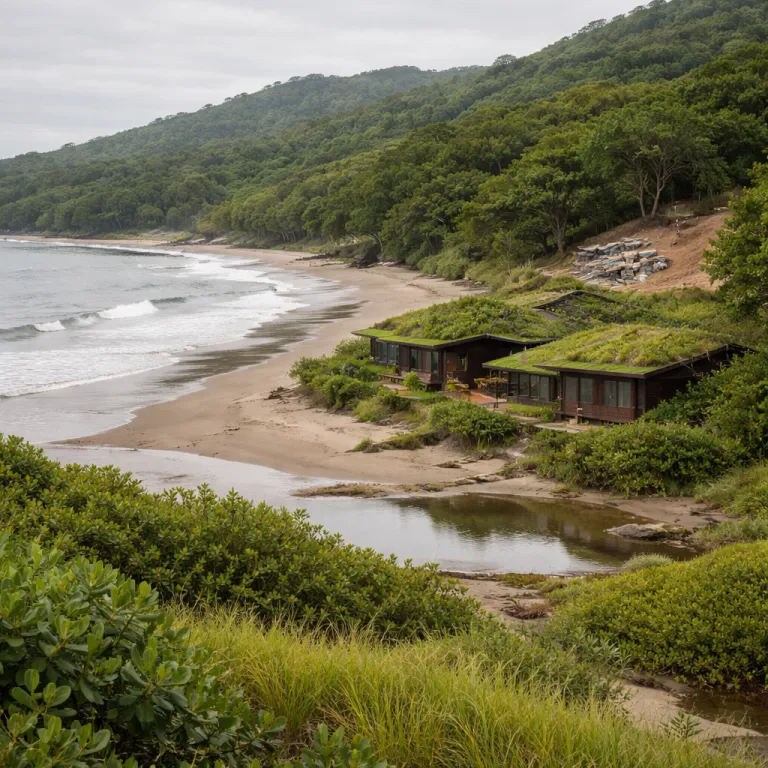
Why Nicaragua’s Pacific still feels like a secret for surf luxury
Nicaragua should already look like northern Costa Rica, yet it does not. Along the Pacific coast, the Nicaragua Pacific surf luxury scene has stayed strangely calm, even as the surf crowd chases warmer waves and easier travel elsewhere. For a couple planning a surf trip with comfort rather than chaos, that gap between expectation and reality is the best news on the map.
Three forces have kept this stretch of coast from turning into a copy of Tamarindo or Jacó. Low density land ownership, infrastructure that lags just enough, and a persistent political risk discount have slowed the usual cycle of speculative surf trips, quick builds, and crowded breaks. The result is a chain of high end properties where you can book a private villa, walk to the beach, and still feel the offshore winds on an almost empty lineup.
Look at Rancho Santana on the Emerald Coast and you see the model in its purest form. According to figures shared in the resort’s own master plan and marketing materials, the property controls roughly 2,700 acres along the Pacific coast, yet caps room numbers and keeps the surf breaks around Playa Santana and Playa Rosada uncrowded. That low density approach defines Nicaragua surf at the top end of the market, and it is exactly what couples seeking a quiet trip rather than a party surf camp should read as a green light.
Farther north, Gran Pacifica Beach and Golf Resort follows a similar playbook for upscale Pacific surf travel. The property stretches along a broad beach with consistent surf breaks, but the architecture and spacing feel more hacienda than high rise. A local manager described the philosophy in a recent tourism roundtable as “more fairway than freeway,” meaning you wake to warm water waves and finish the day on a golf course rather than in a bar line, which is why this coast still attracts travelers who once defaulted to Costa Rica but now want a calmer experience.
Even in Popoyo, where the pace of change is fastest, the structure remains surprisingly restrained. Malibu Popoyo, Surf Ranch Hotel and Resort in Popoyo, and a handful of other properties focus on guided surfing, wellness, and attentive service rather than stacking rooms. Couples can plan surf trips here that feel curated instead of crowded, with surf coaching, yoga, and private transfers arranged before you even contact the resort.
For travelers comparing a surf trip in Central America with a trip to the Maldives, the contrast is sharp. A trip to the Maldives often means boat based surf sessions and a price tag that pushes romance into extravagance. On Nicaragua’s Pacific coast, you can book a week of Nicaragua surf with warm water, reliable offshore winds, and high end service, yet still feel that your trip is anchored in real communities rather than floating above them.
The key is to understand that this is not an accident of geography. Low density land holdings, from Rancho Santana to Gran Pacifica, were deliberate choices that shaped how Nicaragua’s Pacific surf luxury segment would evolve. For couples planning future trips, the question is whether those choices will hold once the roads improve and the risk discount narrows.
The Emerald Coast highway and the new surf luxury map
The Emerald Coast Highway now under construction is the hinge on which this whole story turns. Once complete, it is expected to shorten travel times between Managua, Tola, Popoyo, and San Juan del Sur, effectively redrawing the map for high end surf travel on Nicaragua’s Pacific. What used to be a three hour trip from the airport to the Emerald Coast is projected to compress toward the kind of transfer time many travelers already accept in Costa Rica, based on estimates shared by local tourism officials in recent planning meetings.
That shift matters because accessibility is the missing ingredient for mass market surf trips. When the drive to Popoyo or Playa Santana feels as easy as the run from Liberia to Tamarindo, the pressure to subdivide land and add rooms will intensify. Property values along the Emerald Coast are already rising in anticipation, and couples who book now are locking in a version of Nicaragua surf that may not last forever.
For now, though, the highway is more promise than reality, and that liminal phase favors thoughtful travelers. Resorts like Rancho Santana and Malibu Popoyo are using the time to refine their surf coaching, yoga programs, and wellness offerings, rather than racing to add inventory. If you plan a surf trip in the next few years, you will likely enjoy smoother transfers without yet facing the full weight of mass tourism.
On the ground, you feel the change most clearly around Tola and Popoyo. Land transactions are accelerating, small surf camp operations are testing upgrades, and private villas are appearing on hillsides that once held only cattle. Local real estate agents report that coastal parcels suitable for boutique hotels have seen double digit percentage price increases over the past few seasons, yet the breaks themselves, from the main Popoyo reef to the more sheltered beach breaks, still see far fewer boards than equivalent waves in Costa Rica.
Couples weighing a trip to San Juan del Sur or the quieter Emerald Coast should think in terms of trade offs. San Juan del Sur and the nearby Playa Maderas area offer more nightlife, more restaurants, and easier last minute trips, but the surf breaks can feel busier and the town has long since shed any sense of secrecy. The Emerald Coast, by contrast, still feels like a string of private coves where you contact your resort in advance, book your surf and yoga schedule, and let the staff handle the rest.
If you are tempted to read this as a closing window, you are only half right. The highway will certainly make Nicaragua’s Pacific surf luxury scene more visible to a broader travel market, yet the leading properties are doubling down on low density rather than abandoning it. They know that their value lies in the ability to offer a near private surf experience, not in matching the room counts of a generic beach resort.
For a deeper sense of how Nicaragua handles upscale coastal development, it is worth exploring how the country approaches Caribbean calm as well as Pacific waves. The same restraint that shapes the Emerald Coast also informs the more intimate properties on the Corn Islands, where elegant stays for Caribbean serenity show how luxury and low impact can coexist. That pattern suggests that Nicaragua’s best surf trips will continue to prioritize space, silence, and service over spectacle, even as the road improves.
Low density resorts, real surf, and the case for this model holding
Look closely at the leading names in Nicaragua Pacific surf luxury and a clear philosophy emerges. Gran Pacifica, Rancho Santana, Malibu Popoyo, Hide and Seek Resort, and Surf Ranch Popoyo all operate on a model that treats land as a long term asset rather than a short term commodity. They spread a small number of keys across large properties, then invest in surf coaching, wellness, and service to justify premium rates.
At Rancho Santana, that means five distinct beaches, including Playa Santana with its punchy beach breaks and more forgiving shoulders for intermediate surfing. Guests can book guided surf trips to nearby breaks, arrange private yoga sessions, and still return to a room that feels more like a coastal residence than a standard hotel. The resort’s farm to table dining and emphasis on local sourcing also align with a broader sustainable travel ethos that appeals to couples who care where their food and their money go.
Malibu Popoyo takes a slightly different angle, positioning itself as a surf haven with access to more than ten world class surf breaks within a short drive or boat ride. Here, Nicaragua surf is the organizing principle, with daily surf coaching, flexible surf trips, and a focus on reading the conditions to chase the best waves. Warm water, consistent offshore winds, and a mix of reef and beach breaks make this stretch of coast feel like a more relaxed alternative to a high pressure trip to the Maldives.
Gran Pacifica, farther north along the Pacific coast, blends golf, surf, and residential style stays into a single experience. Couples can book ocean view condos, schedule surf lessons in the morning, and play nine holes in the late afternoon breeze. For many travelers who once defaulted to Costa Rica for this mix of activities, the combination of lower crowd levels and attentive service in Nicaragua is a persuasive reason to shift their next trip.
Hide and Seek Resort and Surf Ranch Popoyo sit somewhere between dedicated surf camp and full scale resort. Both offer structured surf trips, yoga, and wellness, but they keep guest numbers low enough that the lineup never feels like a conference. For couples, that balance between community and privacy is crucial, especially when you want to share a drink with fellow travelers after a day of surfing without feeling trapped in a party scene.
Across these properties, one pattern stands out. They are not trying to be everything to everyone, and they are certainly not chasing the aesthetic sameness that has flattened so many coastal destinations. If you want a deeper analysis of how Nicaragua’s high end properties resist that beige wave, an insider guide to luxury resorts across coast, lake, and island shows how design, density, and context can work together rather than against each other.
From an investment perspective, this low density approach is not a temporary stance. It is the core of the value proposition for Nicaragua Pacific surf luxury, and the owners know that eroding it would undermine their long term pricing power. For couples planning a trip in the next few years, that means you can reasonably expect the current balance of space, service, and surf to hold, even as the Emerald Coast Highway brings more eyes to the map.
Where the model is already eroding, and what to book now
There is, however, one place where you can feel the edges fraying. Popoyo and the surrounding Tola area are already living through the early stages of the classic surf town arc, with more trips, more rooms, and more speculation each season. For couples planning a Nicaragua Pacific surf luxury escape, that makes timing and property choice more important than ever.
On the main Popoyo beach, smaller operations are adding rooms, and informal surf camp setups are testing higher price points. The breaks remain excellent, with a mix of reef and beach options that work across tides and wind shifts, but the sense of having the waves to yourself is less guaranteed than it once was. If you want that near private surf experience, you now need to book with properties that control access points or offer guided surf trips to less obvious spots.
Rancho Santana and Malibu Popoyo are the clearest examples of this protective strategy. By organizing surf coaching, boat based surf trips, and early morning transfers, they help guests sidestep the busiest peaks at the most famous breaks. Couples who contact these resorts early, outline their surfing level, and pre book their preferred dates will find that the service teams can still engineer days where the only other boards in the water belong to your own small group.
San Juan del Sur, and the nearby beaches like Playa Maderas, offer a different proposition. Here, the town energy, restaurant scene, and nightlife are part of the draw, and the surf breaks reflect that with more people in the water and more lessons on the inside. For some couples, especially those who want a mix of surfing and social life, a few nights in San Juan del Sur paired with a longer stay on the quieter Emerald Coast can be the perfect trip structure.
Looking ahead a few years, the most interesting question is not whether Nicaragua will change, but how. The political risk discount that has shaped foreign investment may narrow, infrastructure will improve, and the number of surf trips marketed to an international audience will grow. The open question is whether the low density operators will hold their line or gradually chip away at it in response to demand.
If you are planning a romantic surf trip for the next cycle of anniversaries, act as if this is both a window and a test. Prioritize properties that already demonstrate a commitment to land stewardship, capped room counts, and serious surf programs, and be willing to book earlier than you might for a more generic beach destination. That way, your own travel choices reinforce the version of Nicaragua Pacific surf luxury you came to experience, rather than the one you hoped to avoid.
For a sharper sense of how design and density intersect across the country, it is worth reading an analysis of why Nicaragua’s hotels still look like Nicaragua instead of blending into a global beige. That piece, combined with on the ground reports from the Emerald Coast and San Juan del Sur, will help you choose stays that align with your values as much as with your wave count. In the end, the best trips here are the ones where the surf, the service, and the landscape all feel in balance — and where you leave knowing that your presence did not tip the scales.
Key figures shaping Nicaragua’s Pacific surf luxury future
- Nicaragua’s Pacific coast maintains an average annual air temperature of about 27–28 °C (roughly 80–82 °F), which keeps the water warm enough for year round surfing without heavy wetsuits, according to regional climate summaries from national meteorological data used by leading resorts.
- There are currently at least five identifiable luxury surf focused resorts operating along Nicaragua’s Pacific coast, including Gran Pacifica, Rancho Santana, Malibu Popoyo, Hide and Seek Resort, and Surf Ranch Popoyo, which together anchor the high end of the Nicaragua surf market in recent tourism board surveys.
- Resorts along this coast operate throughout the year, with the most consistent surf conditions typically arriving during the dry season from November to April, when offshore winds are strongest and rainfall is lowest, based on long term weather patterns reported by local operators.
- Many of these properties now integrate wellness programs such as yoga, spa treatments, and guided nature activities alongside surfing, reflecting a broader rise in luxury surf tourism that blends performance with recovery and relaxation.
- As infrastructure projects like the Emerald Coast Highway progress, travel times between Managua and key coastal hubs are expected to shorten significantly, which will likely increase property values and visitor numbers while testing the resilience of the current low density model, according to regional development plans shared with investors.
How to time and structure a Nicaragua Pacific surf luxury trip
For couples, the practical takeaway is straightforward. If you want quiet lineups, warm water, and high touch service, focus on low density resorts along the Emerald Coast and book six to twelve months ahead, especially for peak dry season. Combine a longer stay at a place like Rancho Santana, Malibu Popoyo, or Gran Pacifica with a shorter stop in livelier San Juan del Sur if you also crave restaurants and nightlife.
Ask each property specific questions about guest capacity, surf coaching ratios, and how they manage access to nearby breaks, and favor those that cap room counts and invest in local communities. Done well, your trip becomes more than a week of good waves: it is a vote for a version of Nicaragua Pacific surf luxury that keeps space, culture, and coastline intact for the next visit.