Arrival through the reserve and first view of the bay
The story of staying at Morgan’s Rock ecolodge on Nicaragua’s Pacific coast really begins long before you see the sea. This is a premium but low-key nature retreat rather than a classic resort, and the core verdict is simple: if you value space, wildlife and a protected bay more than nightlife or a long list of pools, the higher nightly rate is justified. Leaving San Juan del Sur, the new Pacific Coastal Highway cuts past Playa El Remanso and Brito, then a discreet turnoff leads you along a dirt road into a private reserve of roughly 4,000 acres (about 1,600 hectares), a figure confirmed in Morgan’s Rock’s 2023 sustainability brief and in Nicaragua’s tourism registry. The drive is slow, framed by dry forest and glimpses of the ocean, and you sense this is not one of the usual coastal hotels built shoulder to shoulder along a sandy beach.
At the gate, staff greet guests with cool towels and a quiet efficiency that sets the tone for the stay. A team member from the front office explains how the property protects both forest and beach, and why the owners chose this low-impact model rather than packing in more rooms. From here, a short ride climbs through forest-view ridges, where howler monkeys call from the canopy and you start to understand how much wildlife this corner of Nicaragua still shelters, including white-faced capuchins, motmots and seasonal migrating birds that appear in the lodge’s internal monitoring reports.
The famous suspension bridge is the final act before you reach your view room. You step out above a steep ravine, with the forest below and a first partial ocean view ahead, and the walk feels like a small rite of passage into the ecolodge. On the far side, golf carts shuttle guests to their view bungalows, but many couples prefer to walk, listening to the mix of forest sounds and the sea somewhere beyond the trees. One staff member summed it up simply: “If you walk slowly, you see twice as much.”
Inside the bungalows: wood, waves and night sounds
Any honest review of Morgan’s Rock has to linger on the bungalows, because they define the stay. Built from certified tropical hardwoods that age to a soft silver, each structure feels more like a forest cabin than a conventional Nicaragua beach suite, with slatted walls that invite breeze and blur the line between inside and outside. The design is eco by intent, but it is also quietly luxurious, with high-quality linens on the bed and thoughtful lighting that flatters the natural grain of the timber.
Most units are set either with a full ocean view or a deep forest view, and both options work well for different travelers. Couples often choose the ocean-view bungalows with a private plunge pool, where you can watch the sea shift from steel to indigo while staying shaded under a roof of palm. Families or friends sometimes prefer the forest-view room layouts, where a generous bed sofa or sofa bed can comfortably host a child or extra adult without feeling like an afterthought.
Bathrooms are semi-open, with strong water pressure and stone details that keep the ecolodge aesthetic grounded rather than precious. At night, you fall asleep to the sound of waves on the white sand beach below, punctuated by the guttural calls of howler monkeys moving through the canopy and the rustle of nocturnal insects. Light sleepers should pack earplugs, but most guests report that the layered soundtrack of wildlife, ocean and wind becomes part of the memory of their stay.
For travelers comparing Nicaragua’s nature retreats, it is worth reading about other volcanic landscape stays such as the crater lakes and cloud forests featured in this guide to Nicaragua’s crater lakes and cloud forest lodges. Morgan’s Rock, however, remains singular in how its view bungalows perch between forest and sea, with every bed angled toward either the bay or the trees.
Sustainability claims, farm to table dining and daily rhythm
Many eco hotels in Central America talk about sustainability; readers looking for a detailed Morgan’s Rock ecolodge Nicaragua review usually want to know what actually happens on the ground. Here, the eco credentials are not just a marketing line, because the property operates its own organic farm inland from the beach and integrates that farm into daily life. Solar energy, rainwater harvesting and low-impact construction methods are part of the infrastructure, and figures shared in Morgan’s Rock’s 2023 environmental summary indicate that solar panels now supply roughly 40–50% of daytime electricity demand, depending on season and occupancy. For guests, though, the more tangible element is what appears on the plate.
Breakfast might feature eggs from the farm, homemade yogurt and fruit grown on the organic plots, served at a shaded farm table overlooking the sea. Later in the day, you can join a guided visit to the farm itself, where staff explain how the operation supports local employment and reduces the need to truck produce in from San Juan del Sur. On a typical morning, you might see rows of plantains, citrus trees and salad greens that supply much of the kitchen’s daily demand. The official line is clear: “Hiking, kayaking, horseback riding, wildlife tours,” and those activities are genuinely available, but the quiet pleasure of walking between the farm rows at golden hour often stays with guests longer than the more obvious adventures.
Dinners lean on Nicaraguan flavors interpreted with restraint rather than fuss, which suits the setting well. Fresh fish from the Pacific, vegetables from the farm and herbs from the garden keep the menu anchored in place, and the kitchen manages to sustain interest across a multi-night stay without feeling repetitive. If you are mapping a longer itinerary that combines coast and countryside, pair this coastal ecolodge with a stay on Ometepe or a working finca such as those described in this piece on quiet luxury fincas in Nicaragua, then compare how each property interprets the farm-to-table idea.
The turtle beach, the brief closure and what it reveals
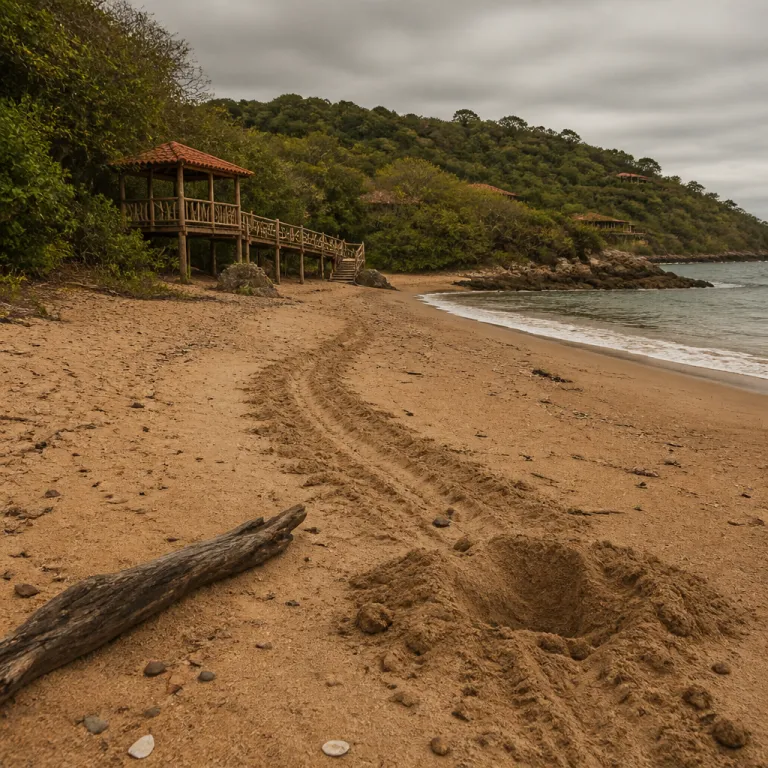
What sets this account of Morgan’s Rock apart is the focus on the one-mile stretch of sandy beach that doubles as a turtle nesting site. The bay itself curves gently, with white sand that squeaks underfoot and a beach bar tucked discreetly at one end, serving cold drinks without drowning out the sound of the sea. For most of the year, the beach feels almost private, shared only with a handful of guests and the occasional local family from San Juan del Sur.
During nesting season, endangered sea turtles haul themselves up the beach at night to lay eggs above the high-tide line. On this part of Nicaragua’s Pacific coast, peak nesting for olive ridley turtles typically runs from roughly July through January, with sporadic activity outside those months according to lodge records and regional conservation data. The ecolodge runs tightly controlled viewing experiences, limiting group size and red light use to keep the impact low, and staff are trained to prioritize wildlife over photo opportunities. Internal monitoring reports from recent seasons note that dozens of nests can be recorded along the bay in a good month. Watching a turtle return to the ocean after nesting is one of those rare travel moments that can recalibrate how you think about the Pacific, especially when you walk back to your bed knowing that 4,000 acres of protected forest rise behind the shore.
The property’s brief fiscal closure over two days in 2023 due to a dispute with authorities, later resolved, underlined how complex it can be to operate high-end eco hotels in Nicaragua. Local business press and Morgan’s Rock’s own statement refer to a temporary suspension of operations in late August 2023 while tax documentation was reviewed, with the lodge reopening after roughly 48 hours once the paperwork was clarified. For guests, the episode barely registered beyond a short note on booking channels, but for industry watchers it highlighted the importance of clear regulation for low-impact projects that manage both forest and beach. When you stand on the sand at dusk, with howler monkeys calling inland and waves folding onto the shore, the politics feel distant, yet they shape whether places like this can continue to protect both wildlife and livelihoods year after year.
Rates, value and how Morgan’s Rock fits into the Pacific coast
No in-depth look at Morgan’s Rock is complete without addressing value, because this is one of the more expensive stays on Nicaragua’s Pacific coast. Rates reflect the combination of a vast private reserve, a near-empty beach and a level of service that sits comfortably in the premium bracket without tipping into formality. As of late 2023, published rates for two people in a bungalow generally start around US$350–US$450 per night in the green or shoulder season and can rise to US$600 or more in peak holiday periods, with exact figures varying by room type and board plan. For a couple, the real question is whether the ocean-view bungalows with private plunge pools and that long white sand bay justify the price compared with other hotels between San Juan del Sur and the Tola corridor.
In practice, the answer depends on how you travel. If you want nightlife, restaurant hopping and a quick taxi back to your bed, then staying in town in San Juan del Sur or closer to Playa Maderas will suit you better and cost less per night. If you value space, wildlife, a genuinely low-impact approach and the feeling of being on a private stretch of sandy beach where you might share the dawn with sea turtles rather than surfers, then Morgan’s Rock earns its rate.
Many travelers now pair a few nights here with time further north along the Emerald Coast, using guides such as this overview of Tola and Guacalito for Pacific quiet to compare options. Against those newer developments, this ecolodge feels more rooted in the landscape, with its organic farm, forest-view trails and simple beach bar rather than a string of pools. For couples who want to wake to howler monkeys, walk from bed to sea in minutes and feel that their stay supports both conservation and community, Morgan’s Rock remains one of Nicaragua’s most compelling nature retreats.
FAQ
Is Morgan’s Rock suitable for families with a child ?
Yes, Morgan’s Rock works well for families, especially those who value nature and space. Many bungalows can accommodate a child on a sofa bed or bed sofa, and the calm sandy beach is generally gentle enough for supervised play. Family-friendly activities include wildlife walks, farm visits and guided kayaking, which keep both adults and children engaged.
What activities are available during a stay at Morgan’s Rock ?
Guests can choose from hiking through the private reserve, guided wildlife tours focused on howler monkeys and birdlife, and water-based options such as kayaking or paddleboarding on the ocean. Horseback riding along the beach or into the hills is also offered, along with visits to the on-site organic farm. Many couples balance these activities with quiet time in their view room or by the private plunge pool.
When is the best time of year to visit Morgan’s Rock ?
The dry season, typically running from late in the calendar year into the first half of the next, offers the sunniest beach conditions and the clearest ocean view. Travelers interested in sea turtles should check nesting patterns, which often peak between about July and January on this stretch of coast. Shoulder season can bring greener hillsides and fewer guests, though some days may be more humid or cloudy.
How does Morgan’s Rock compare to other eco hotels in Nicaragua ?
Morgan’s Rock stands out for its scale, with 4,000 acres of protected land and a largely undeveloped bay, which few other eco hotels in Nicaragua can match. The combination of organic farm, wildlife-rich forest and a long white sand beach creates a more complete nature experience than many smaller properties. Travelers focused on spa facilities or nightlife might prefer other hotels, but for low-impact coastal immersion this ecolodge sits near the top of the list.
How do I reach Morgan’s Rock from San Juan del Sur or Managua ?
From San Juan del Sur, the drive along the Pacific Coastal Highway toward the Tola corridor takes less than an hour to cover roughly 20 miles (about 30 kilometers), with a signed turnoff leading to the reserve entrance. From Managua, most guests arrange a private transfer of around 2.5–3.5 hours for the 90–105-mile journey (approximately 145–170 kilometers), which can be combined with stops in Granada or at a crater lake en route. The final approach through the forest, over the suspension bridge and down toward the beach is part of the experience, so allow time to arrive before dark.
Sources
Instituto Nicaragüense de Turismo (INTUR); Morgan’s Rock official communications and sustainability brief (updated 2023); Rainforest Alliance reports on sustainable tourism in Central America; regional sea turtle conservation data for Nicaragua’s Pacific coast; local Nicaraguan business press coverage of temporary fiscal closures affecting hospitality projects, including the late August 2023 review of Morgan’s Rock’s tax documentation.